The Acoustics of a Household
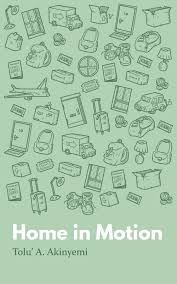
In Home in Motion, Tolu A Akinyemi extends his enduring inquiry into displacement, intimacy, and the hushed architecture of feeling that scaffolds everyday life. These are works whose surfaces are deceptively spare, whose depths hum with psychological weight, whose pulse is patient and precise. “Sibling’s War” stands among the collection’s most arresting chamber portraits, transmuting the routine skirmish between brother and sister into a meditation on endurance, on the wearied tenderness of the mediator, on the delicate accords by which a family holds itself together.
What strikes first is Akinyemi’s dramaturgical instinct, his unerring sense for the threshold where casual noise tips into theatre. “The boy screams & the girl bellows” flings the door open without preamble, without polish, without apology. We arrive already mid-storm, inside the cymbal-crash of feuding registers, inside the ignition itself. The ampersand torques the phrase into velocity, fusing the two combatants so closely on the page that their quarrel becomes the very air the poem breathes.
Akinyemi understands that the home is, more often than we admit, theatrical terrain, a modest proscenium of inheritance and improvisation. “It’s an audition for a siblings’ war” is a wonderfully calibrated trope, framing the dispute as performance rather than singular event. An audition implies rehearsal, return, the slow apprenticeship of strife. The pair are not merely quarrelling. They are learning a vocabulary, an inheritance, a melody. This staginess reverberates with one of the broader preoccupations of Home in Motion: how selfhood is practised within familial walls long before it ever steps into the public world.
The imagery moves with supple fluency between mischief and melancholy. “They unload a truck of complaints” lands first as wry comic observation, but the temperature climbs in what follows: “Each painting the other in bad light / Until the light was broken.” Here Akinyemi’s craft glints into full view. The figure travels from accusation into the eclipse of illumination itself. The lamp does not flicker; it shatters. The dwelling becomes a room in which clarity and warmth are eroded by the friction of repetition, and yet still, somehow, held.
Beneath the siblings’ clamour lies the calmer centre of gravity: the patient mediator. “& I became weary from fielding swinging daggers” introduces a caretaker burnished thin by ceaseless intercession. Fielding is a marvellous verb-choice, conjuring the relentless choreography of catch, absorption, redirection. Such labour here is athletic, looping, balletic in its understated heroism, a private stewardship the work honours without ever announcing.
There is, too, a distinctly Nigerian and diasporic music in the lyric’s humour, most audibly in passages like “Task for a DNA test / But the resemblance is spotless.” Akinyemi wields wit not to puncture the seriousness of the rift but to illuminate how families metabolise tension through
irony, hyperbole, and the great inheritance of laughter. The line carries the unmistakable lilt of spoken domestic observation, anchoring the piece in lived, breathing experience.
The tonal pivot the girl performs, her insistence that this is, after all, “just a friendly argument,” is one of the text’s most intelligent flourishes. After daggers and broken light, the understatement arrives like a punchline whispered in church. Akinyemi captures, with delicious precision, the alchemy by which interior chaos becomes interior climate, the storms within a hearth eventually renamed unremarkable weather.
Formally, the enjambments propel everything with the breathless tempo of contention itself. Phrases tumble into one another with scarcely a beat for silence, embodying the emotional crowding of a dwelling alive with voices, alive with elbows, alive with the perpetual overture of youth. The composition leaves little room to breathe, and that is precisely its song.
The closing image is quietly devastating in the gentlest way: “I pay a fiver daily for a truce on school trips.” In a single detail, the poem alights from figure into the tangible currency of care. Peace becomes a small daily transaction, a coin pressed into chaos, a tacit diplomacy between cordial rival states. The final flourish of siblings who “thunder time & again” returns the verse to elemental imagery, suggesting that conflict within the home is cyclical, atmospheric, climatic rather than catastrophic, weathered rather than warred.
Within Home in Motion, “Sibling’s War” exemplifies Akinyemi’s gift for unearthing luminous emotional truths from the humblest encounters. He writes the domestic not as sentimental sanctuary but as a living terrain of collision and accommodation, of resilience and care held close even when proximity strains it. His poetry succeeds because it listens, attentively, lovingly, to the acoustics of ordinary life: the raised voices, the sighed forgivings, the ironic asides, and the steady truces by which families continue, beautifully, to survive one another.